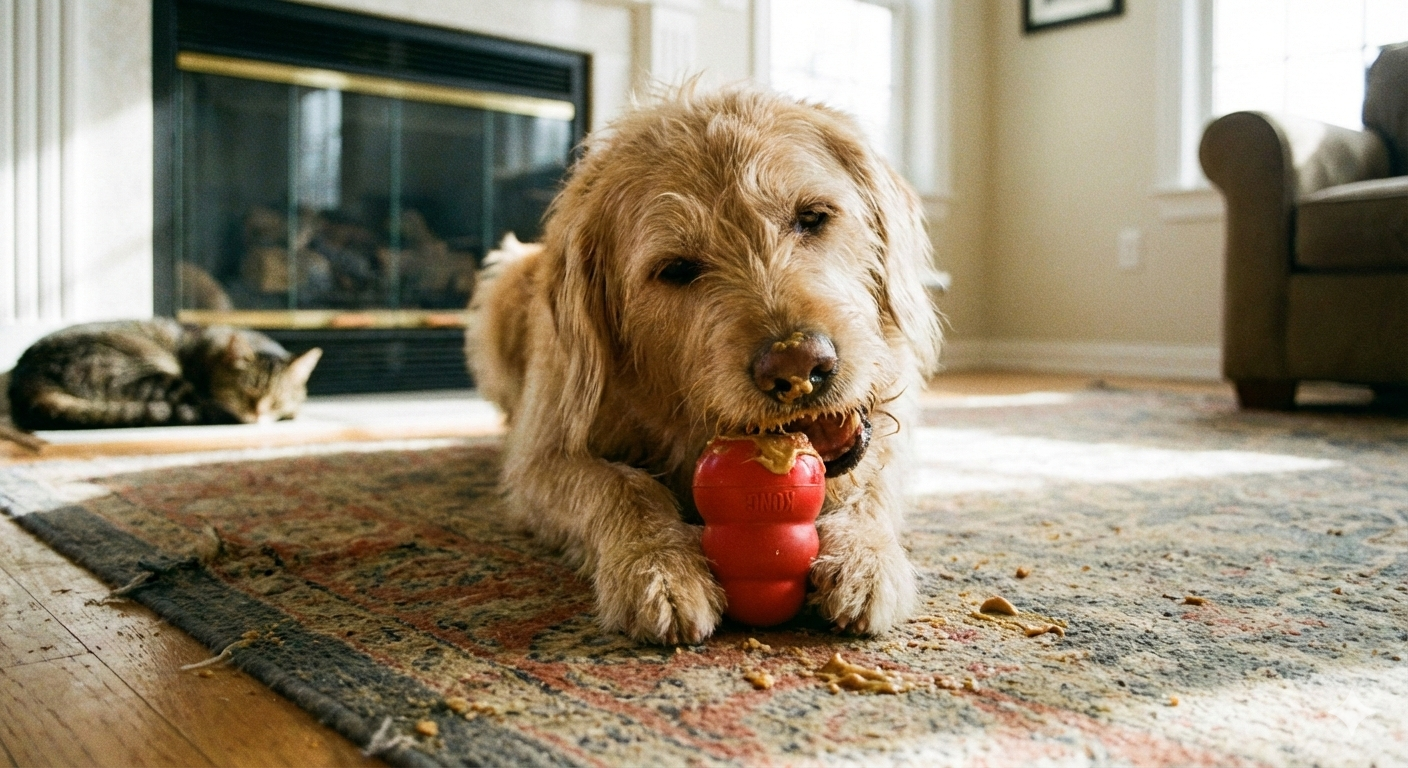
Peanut butter can be an effective way to help your dog take medication or as a treat when leaving the house, but it must be used in moderation and should be free of Xylitol. This artificial sweetener is extremely toxic and potentially fatal to dogs, leading to rapid insulin release, low blood sugar, seizures, and liver failure. Opt for natural peanut butter with minimal ingredients (ideally just peanuts and maybe salt), avoiding added sugars, hydrogenated oils, and preservatives, and serve it in moderation due to its high fat and calorie content to prevent weight gain or pancreatitis.
When choosing peanut butter for your dog, make sure it is free from harmful ingredients like xylitol and other sugars that are toxic to pets. Verify that it contains natural, simple ingredients. Opt for a brand that uses high-quality peanuts and look for those specifically labeled as safe for dogs.
- Check the label for xylitol: This is the most critical step; if it’s listed, do not give it to your dog, say American Kennel Club and Intracoastal West Vet Hospital.
- Look for simple ingredients: Opt for brands with just peanuts, or peanuts and salt.
- Avoid: Added sugars, hydrogenated oils, preservatives, and other artificial sweeteners.
Benefits (in moderation)
- Provides protein, healthy fats, vitamins, and fiber.
- Can help hide pills or fill Kong toys.
Risks & moderation
- High in calories: Too much can lead to obesity and pancreatitis.
- Treat rule: Treats, including peanut butter, should be no more than 10% of your dog’s daily calories.
- Serving size: Start with a half teaspoon for small dogs, scaling up slightly for larger dogs, but always check with your vet.
How to serve
- On a spoon, Stuffed in toys like a Kong, Frozen into treats, and Spread on a lick mat.